Our Heritage
The story of Hardison Baptist Church is one of steady faith and remarkable growth, shaped by the commitment of the faithful membership and dedicated pastors.
The church traces its origins to a tent meeting held in 1901, led by circuit-riding preacher Rev. W. L. Cutts. This revival ignited a spirit of fellowship that led to Mr. and Mrs. Jeff D. Hardison offering a gift of deeded land for the church’s first building in 1902.
The congregation officially chartered the church on September 26, 1902. By April 10, 1904, the newly constructed meetinghouse was dedicated, with Rev. Cutts presiding over the service. That same year saw the church’s first Lord’s Supper and the church’s first funeral, held to honor of sister Alma Hardison.
The early decades established a tradition of vibrant gatherings and revivals. In 1907, Sam F. Loew was ordained, and by 1913, large crowds attended a revival with T. S. Hubert, marking a period of steady membership growth. The 1920s brought significant ministry, including a Sunday School rally in 1922 that drew over 500 attendees, and a Sunday School Conference in 1924. A succession of pastors, such as Rev. C. C. Herd in 1926, guided the congregation through these years. Community and fellowship remained central—evidenced by events like the 1934 ladies’ luncheon and the Sunday School picnic of 1939.
As the church grew, so did its facilities and ministries. The first major addition to the building, in 1945 under Rev. M. E. Wells, provided space for five classrooms, keeping pace with an expanding congregation. The years following World War II saw spirited revivals and the installation of new leadership, including pastors like Bob Puckett and Clint E. Rogers, the latter becoming the first pastor to reside locally. By the mid-1950s, the church offered full-time worship services, added a platform for the pulpit (accommodating the choir), and completed a pastorium adjacent to the church, thanks to a donation from Mr. and Mrs. Jasper Hardison.
The late 1950s and 1960s marked a period of transformation and outreach. In 1959, under Rev. R. Gene Payne, the church expanded with an “L”-shaped addition using sections from the old USAF Robin’s Air Base Hospital, providing a kitchen, fellowship hall, nursery, office, restrooms, and classrooms. The auditorium was enlarged, and the installation of a baptistry in 1961 made ministry even more convenient, with Bill and Patsy Burnett among the first to be baptized in it. A new piano and organ were both donated in 1965, and that December, Rev. Boyd Dickey began his long tenure as pastor, ushering in a period of steady leadership.
The church continued to thrive through the 1960s and 1970s, hosting revivals with noted preachers, expanding its youth group, and seeing membership climb—reaching 265 by 1967 and 535 by 1973. Building renovations reflected growth and modernization, including a new red-carpeted sanctuary with white pews dedicated in 1969. The congregation’s activities ranged from “wiener roasts” to large homecoming celebrations, and the choir became a central fixture. The church maintained its Southern Baptist ties until the mid-1970s, when she broke with the then liberal leaning denomination, choosing to maintain fundamental Bible positions as an independent Baptist church.
The 1980s brought further expansion and outreach. Rev. Chesford M. Carr took over as pastor in 1986. The church added amenities such as a gym and softball field, installed a bell in the steeple, and engaged in powerful revivals, and hosted community events like craft fairs. Membership continued to climb, and the church’s musical tradition flourished with cantatas and guest performances.
As the 1990s began, Hardison Baptist Church saw even more growth and modernization. New ministries included a bus ministry initiated by Rusty McGalliard in 1995, and the church purchased a 31-passenger mini-bus in 1997. Renovations continued, with the three-story building receiving fresh paint and new carpet. A major milestone came in the 1990s with the construction of a multi-purpose building, complete with a kitchen, fellowship hall, classrooms, and library, dedicated under the leadership of Rev. Charles R. Odum. Sunday School grew and adapted as needs changed. During this period, the church adopted the Faith Promise method for missions giving.
From the turn of the century onward, HBC has continued her tradition of being a Christ-honoring church dedicated to her Savior. The future is promising as they move forward, reaching souls for Christ in Middle Georgia and around the world.
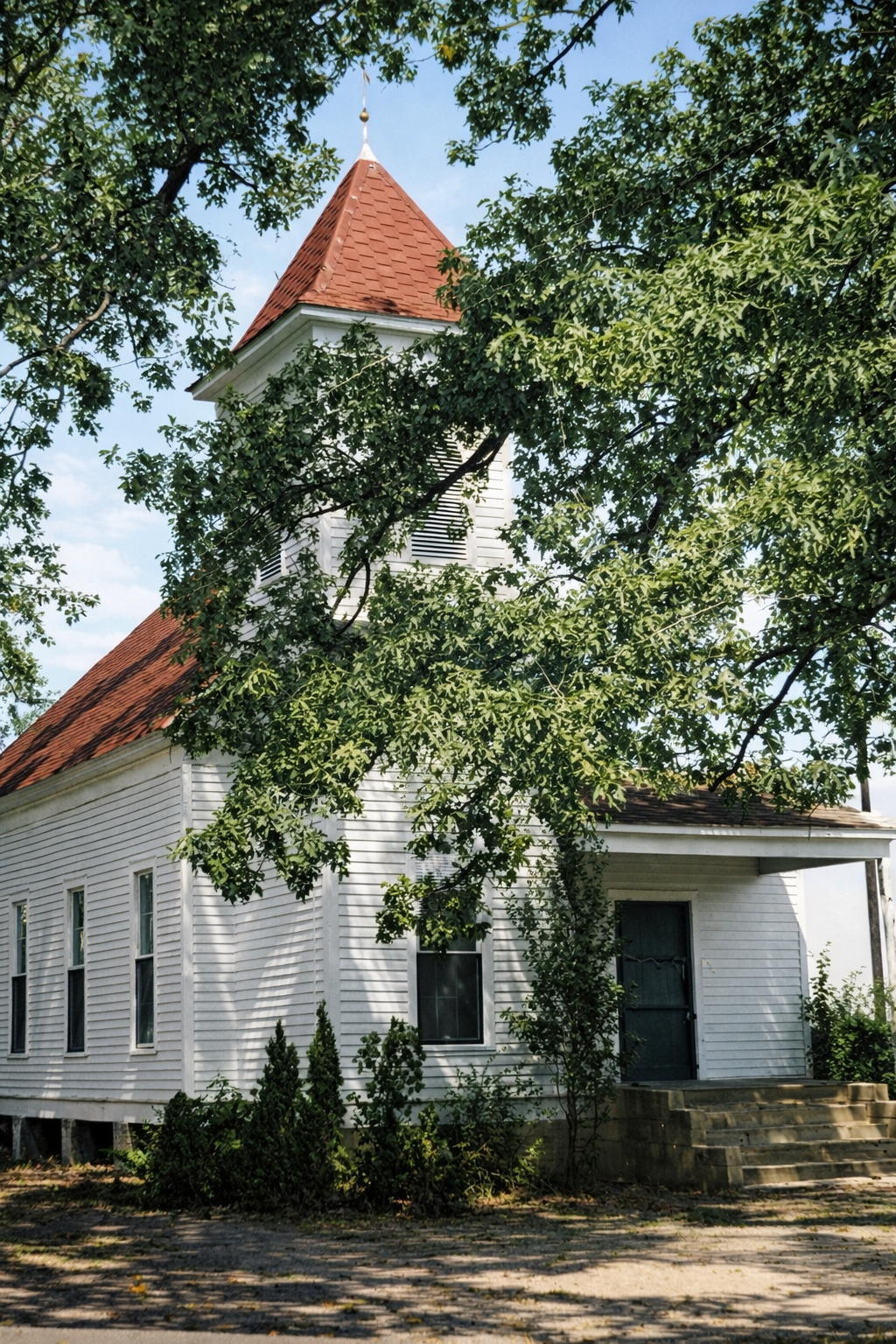
Original Meetinghouse in the very early years.
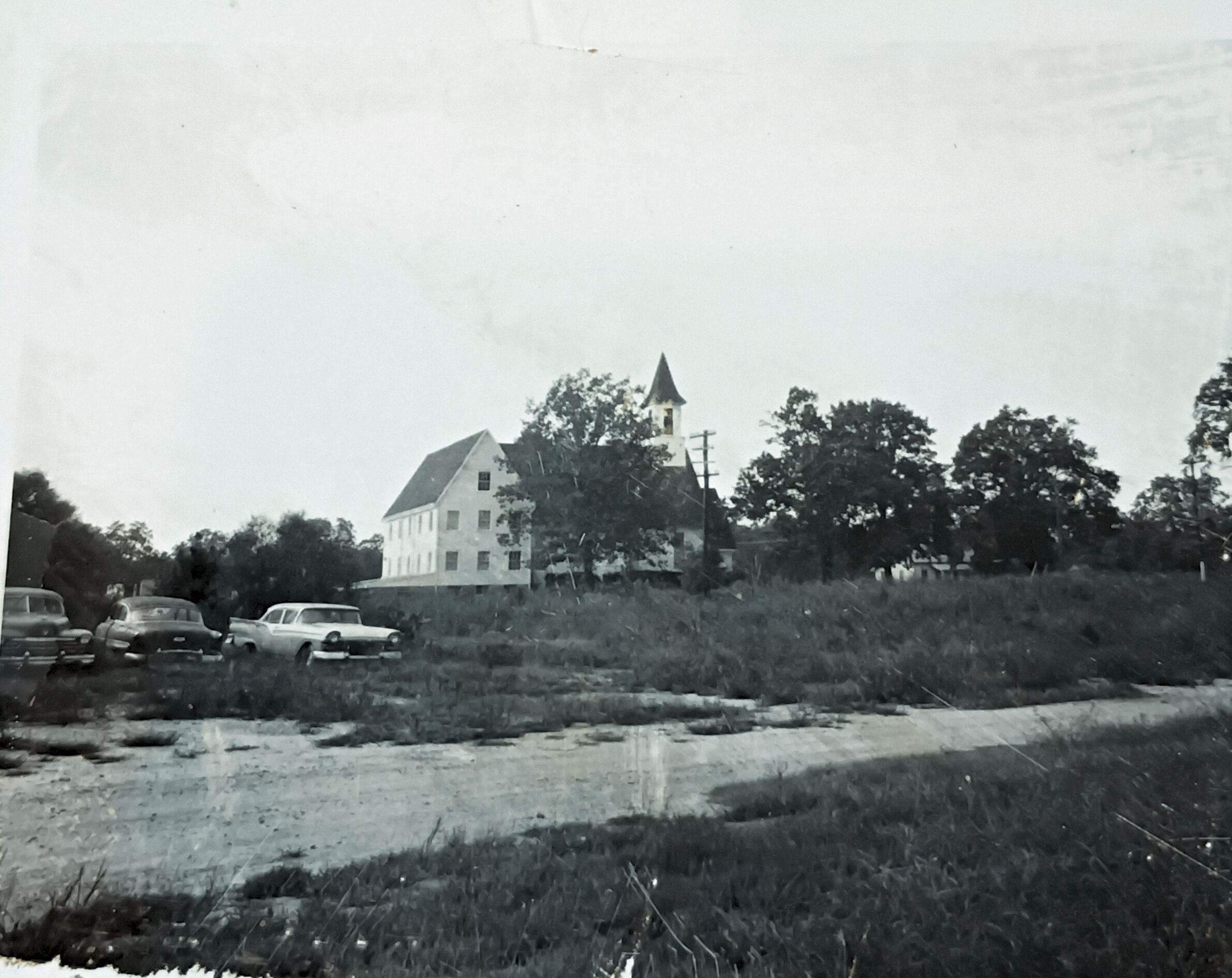
Church in the !940’s
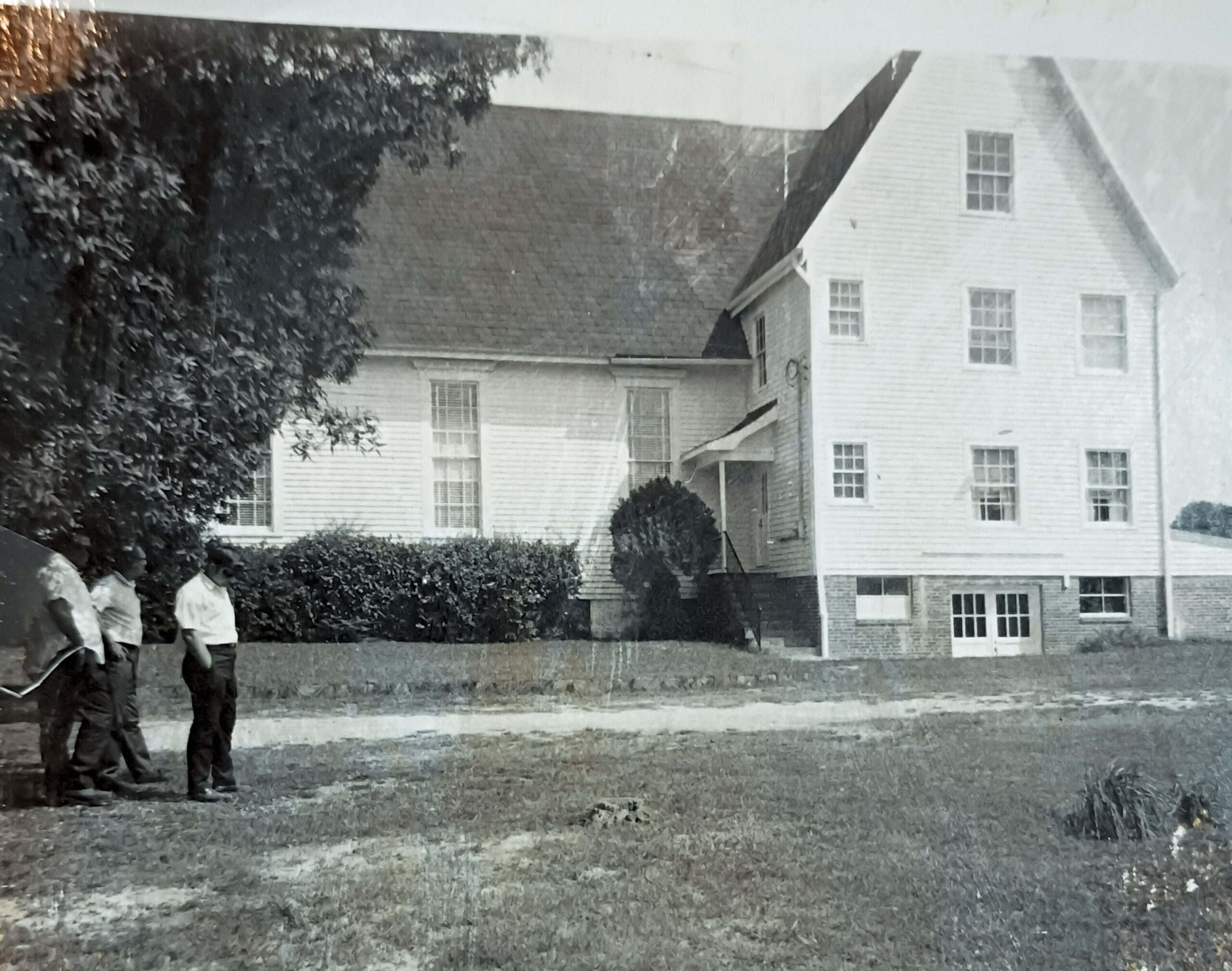
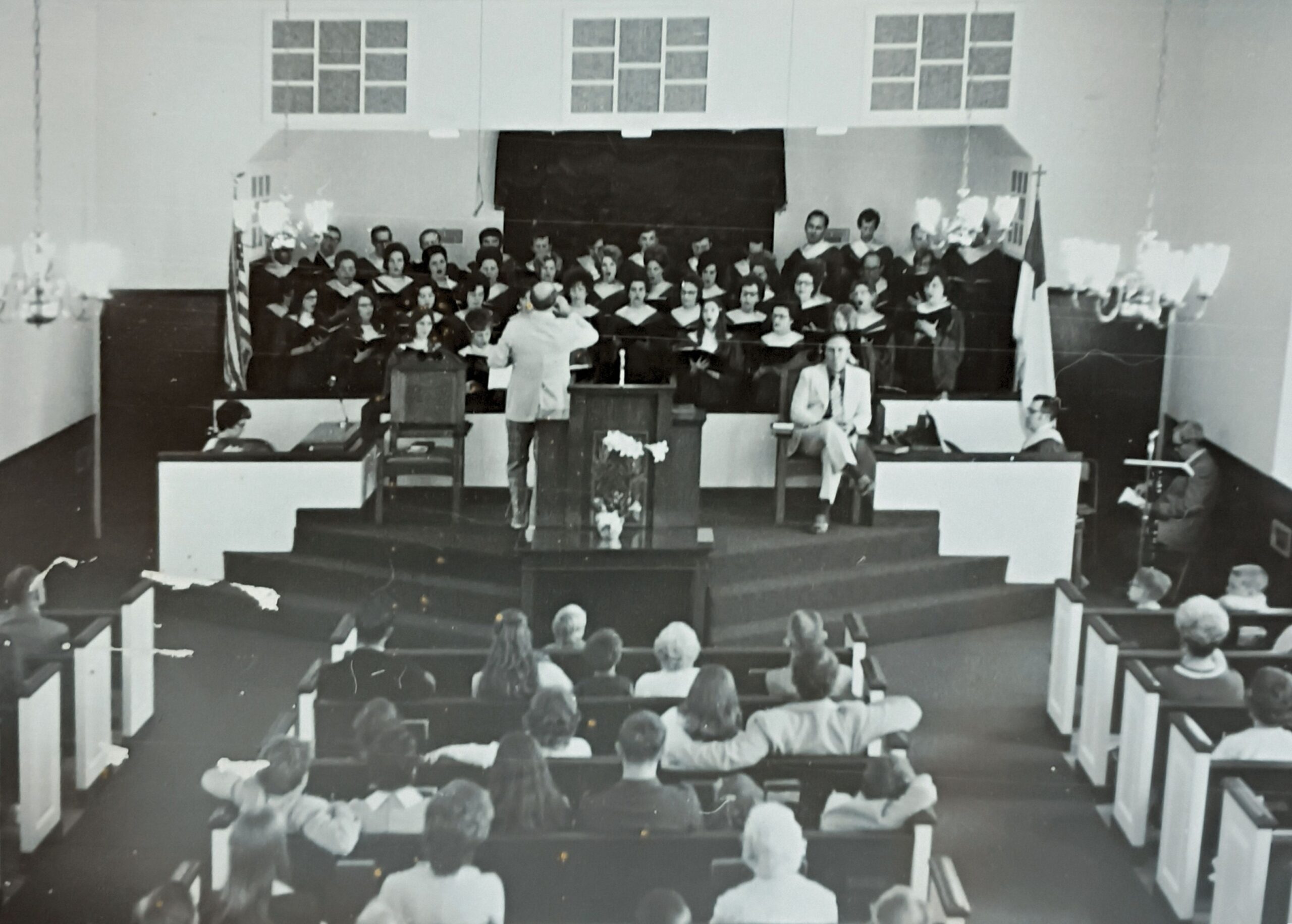
Great choir of the early 70’s
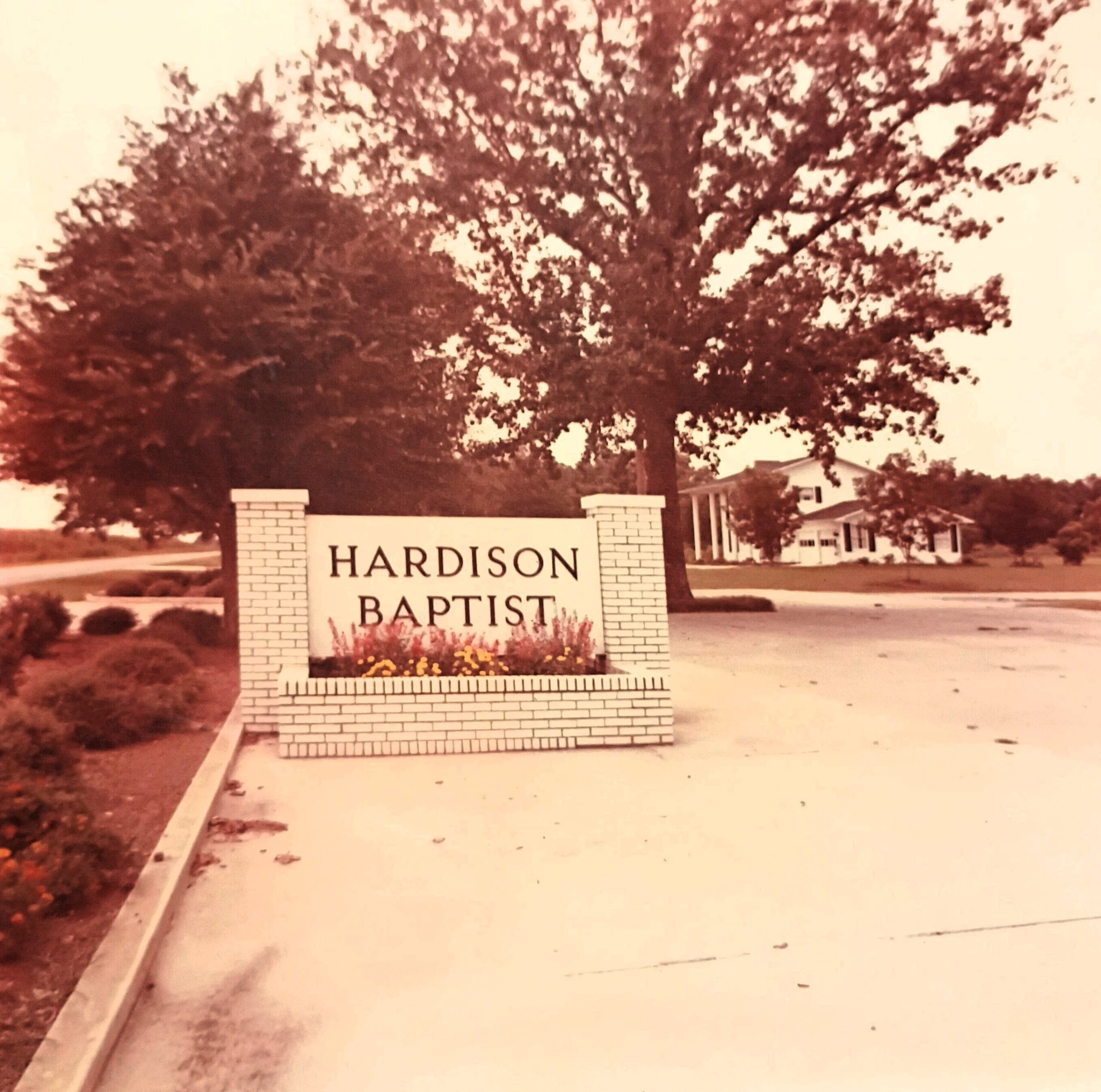
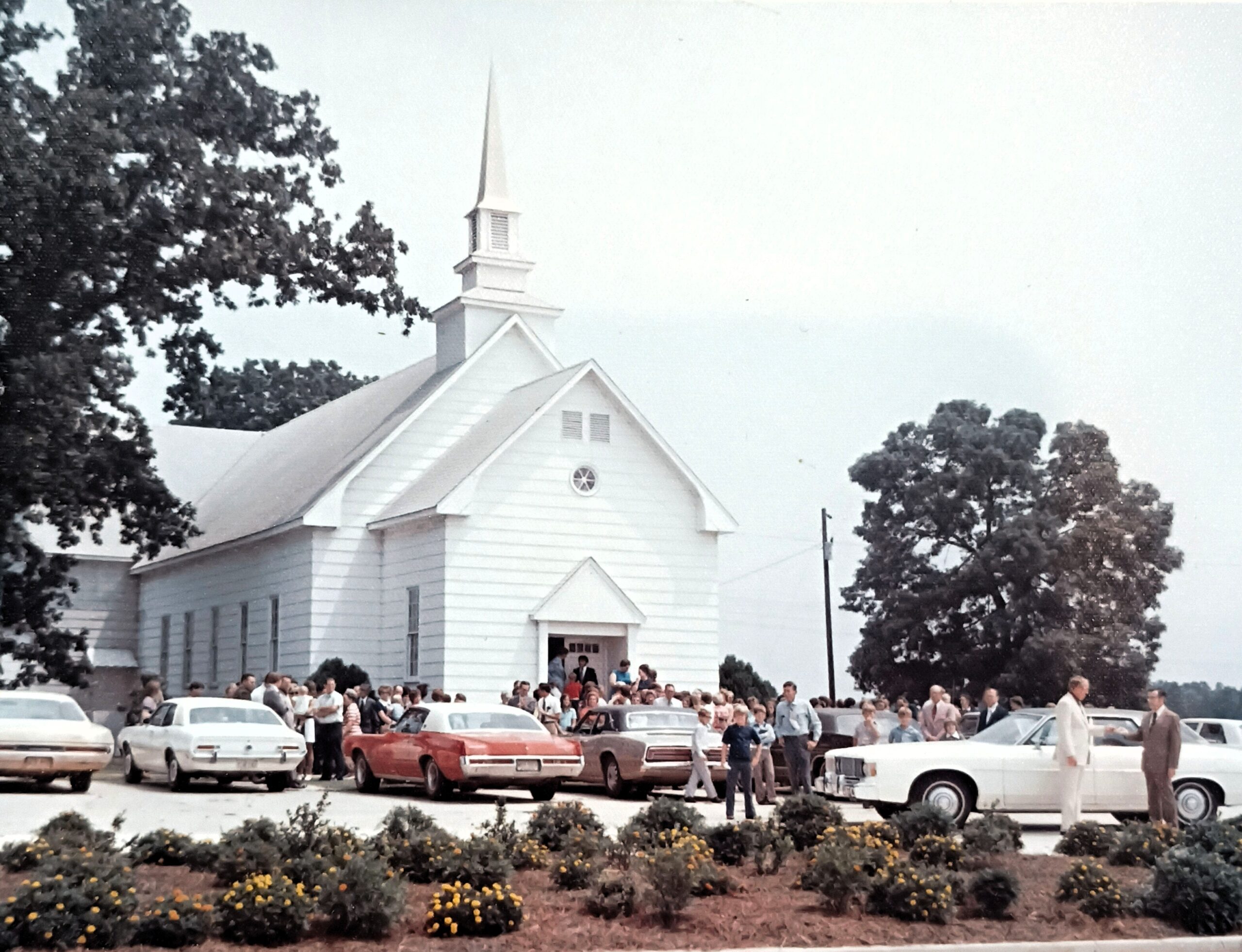
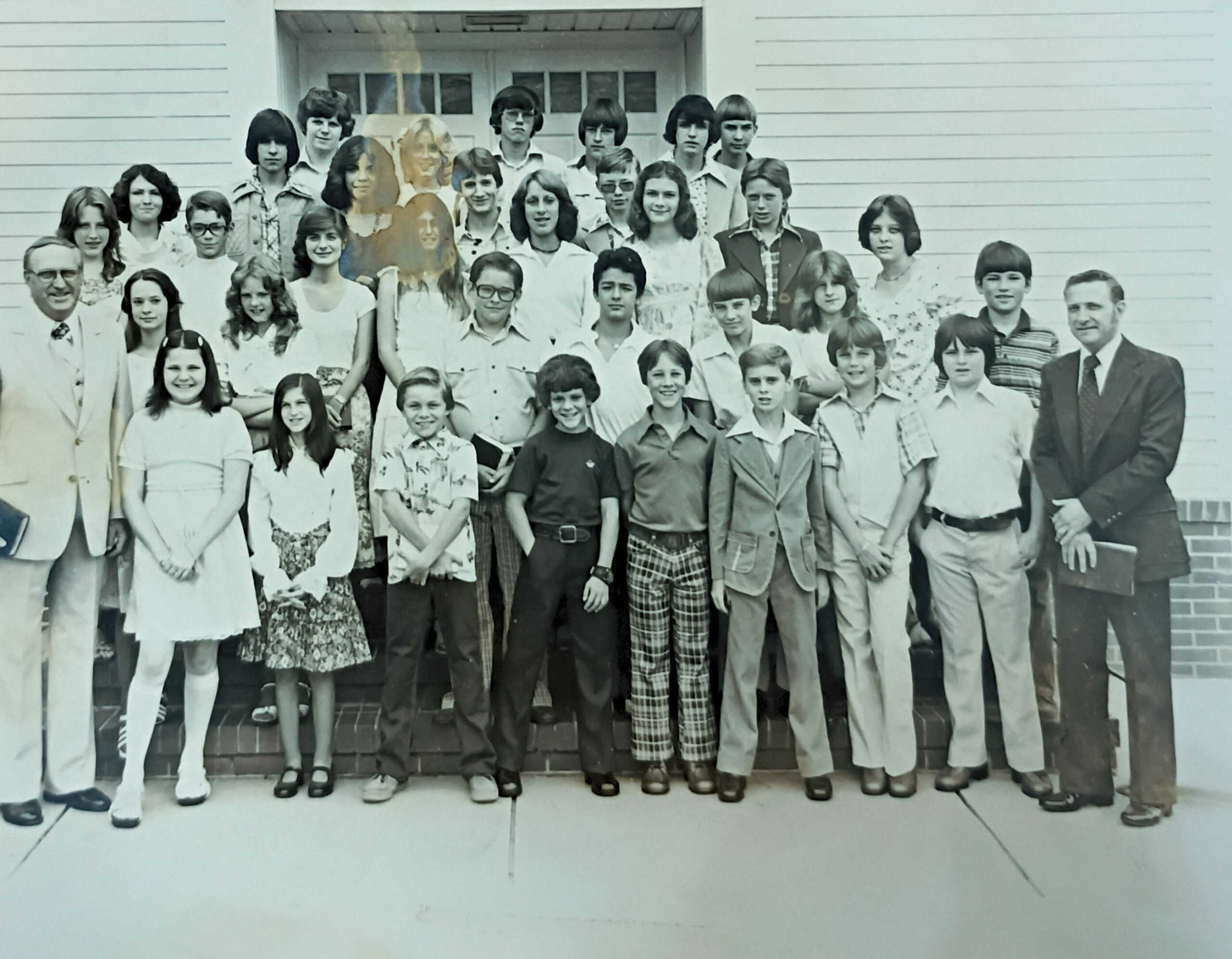
Early 70’s teens with pastor.
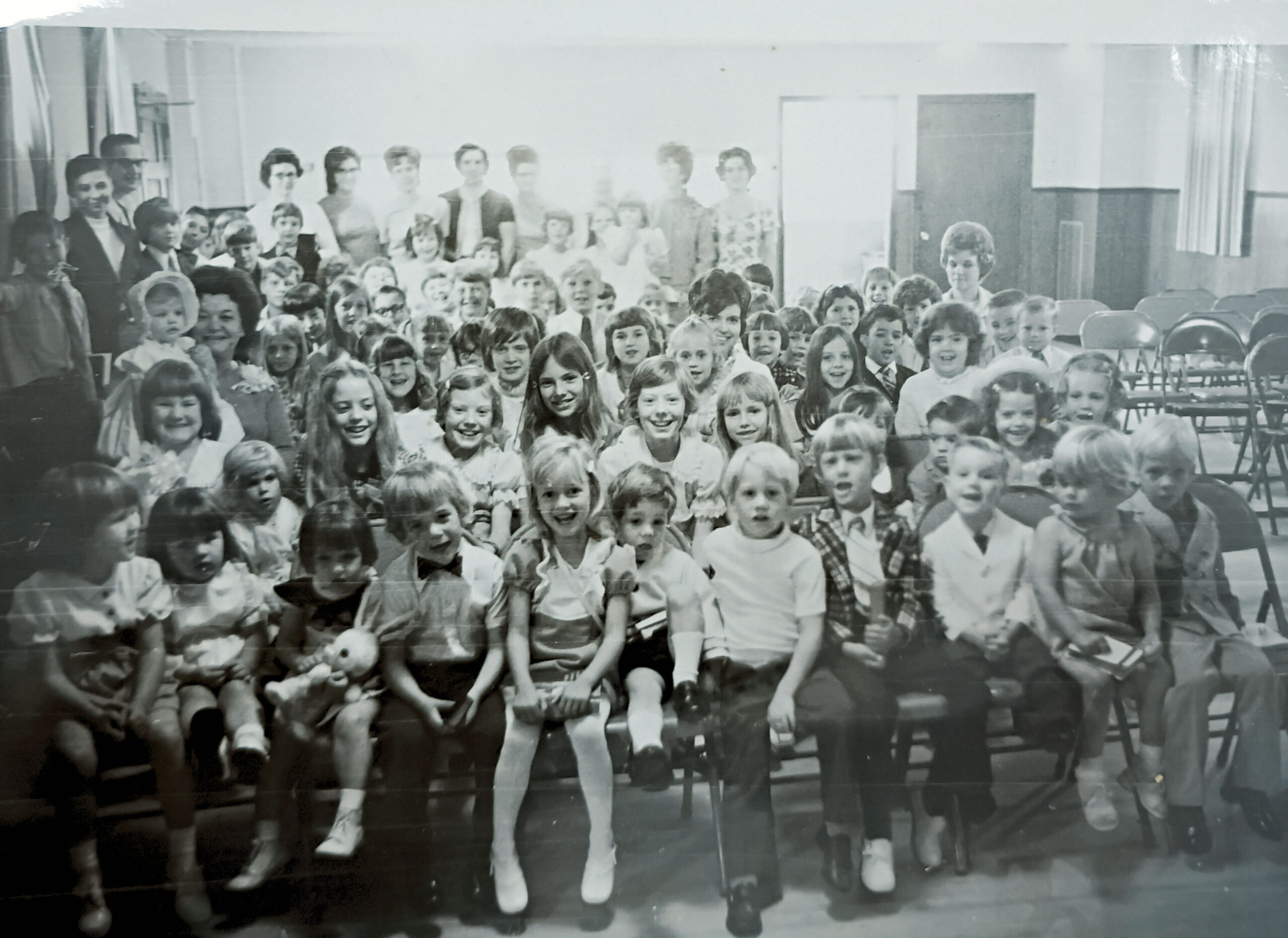
1970’s children ministry
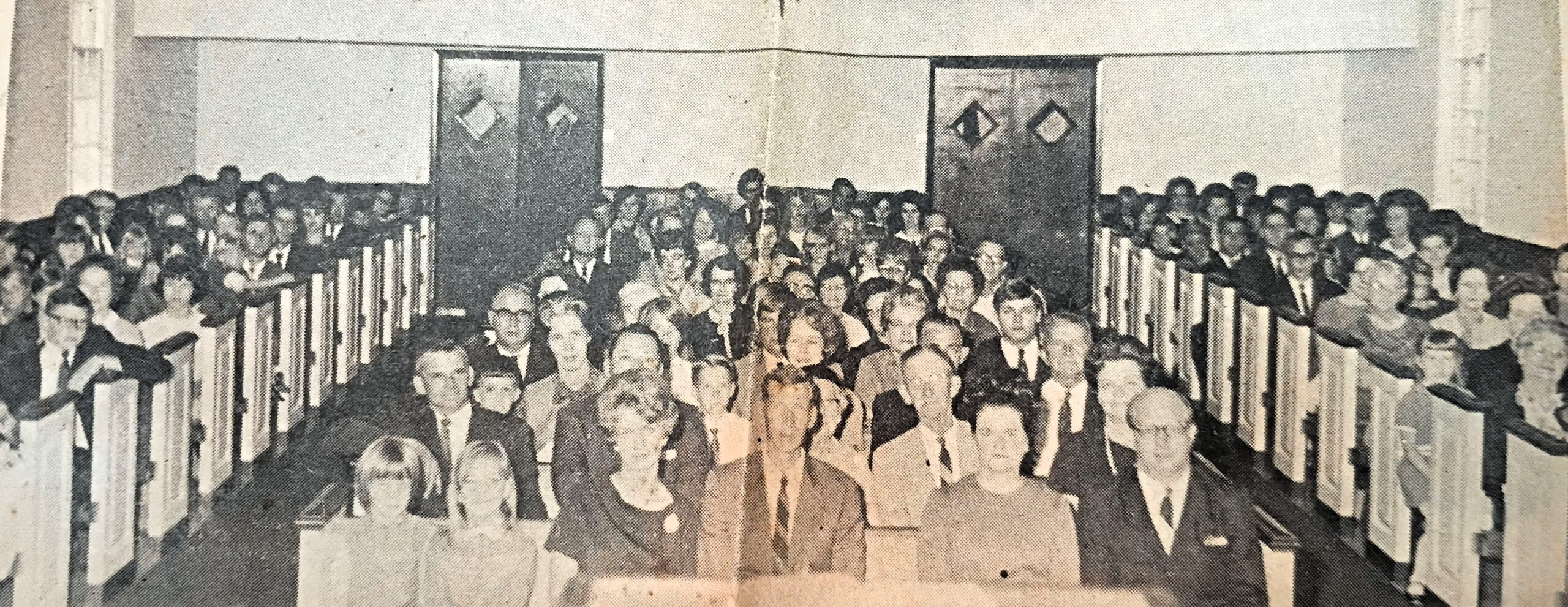
Late 1960’s service